Home / Automatic Doors / What Time Should an Automatic Chicken Coop Door Close?
What Time Should an Automatic Chicken Coop Door Close?
What time should an automatic chicken coop door close? For most flocks, the right answer is not a fixed clock time year-round. Close after the birds have reliably gone to roost, using sunset, a light sensor or a seasonally adjusted timer with a safety margin for stragglers.
If the schedule itself seems reasonable but birds are still being locked out, see why an automatic chicken coop door may be closing too early.
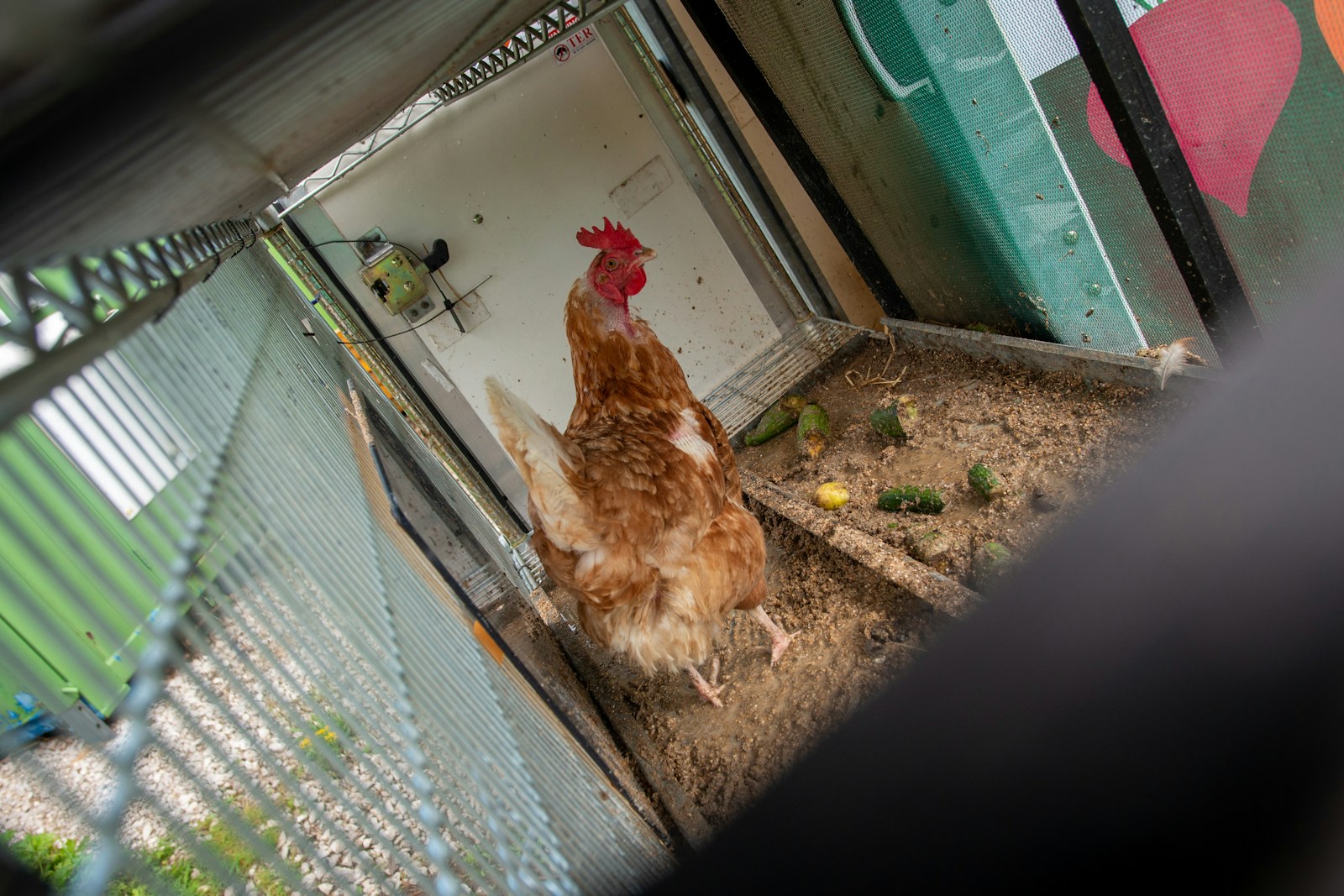
What time should an automatic chicken coop door close? Usually, after your last chickens have entered the coop but before you are relying on the open pop hole deep into the night. For many setups, that means using dusk plus a short delay rather than one permanent clock time.
Quick answer
Start by observing your flock for several evenings. Note when the last bird goes inside, then set the automatic door to close later than that. If your controller uses a light sensor or sunset schedule, begin with a conservative delay and shorten it only after you know the flock’s routine.
Why there is no universal closing time
Sunset changes through the year, and chickens respond to light rather than your wall clock. A 7:30 p.m. close may be comfortably late in summer and far too late in winter. Breed, age, weather, shade and flock hierarchy can also change when individual birds go to roost.
Sunset plus a delay is a useful starting point
Many automatic doors allow a sunset offset or light-sensor delay. The goal is to give the final birds time to enter without leaving the coop open unnecessarily long. RUN-CHICKEN, for example, publishes adjustable sunrise/sunset offsets on the current T50. Other systems use a light threshold or timer.
Do not copy somebody else’s exact delay without watching your own birds. A shaded yard, bright summer evening or timid hen can change the routine.
Watch the last bird, not the first
The flock does not enter all at once. Dominant hens may take preferred roost spots early while younger or lower-ranking birds linger outside. Your schedule has to work for the slowest regular bird.
During the first week, count birds after the door closes. If you repeatedly find a straggler outside, move the closing trigger later rather than assuming the bird will learn immediately.
Timer or light sensor?
A fixed timer is easy to understand but needs seasonal adjustment. A light sensor follows ambient conditions but can be affected by sensor placement. Sunrise/sunset scheduling follows the calendar but must be configured correctly. There is no single best trigger for every yard.
Our timer vs light sensor guide explains the tradeoff in detail.
Should the door close exactly at sunset?
Not automatically. Some flocks are inside before sunset; others have a few birds that wait until the light is quite low. Closing exactly at the published sunset time can be too aggressive if your birds routinely enter later.
The safer setup process is to observe, add margin and then refine the schedule.
What about predators?
Predator pressure is one reason owners want the door closed promptly, but an automatic door should not be treated as the entire security system. Hardware cloth, latches, roof edges, ventilation openings and the run still need to be secure.
Read what automatic chicken coop doors can and cannot do against predators before relying on the pop-hole door alone.
Seasonal changes
If you use a timer, review the closing schedule as daylight changes. A simple monthly reminder is enough for many owners. If you use a light sensor, seasonal adjustment may be smaller, but you should still watch the flock after major daylight shifts or after moving the sensor.
Weather can change bedtime
Heavy cloud, rain or snow can make the yard dark earlier than usual. A light sensor may react to those conditions while a timer will not. This is where hybrid controls or adjustable delay can be helpful.
What if one chicken keeps getting locked out?
First move the close time later. Then watch the bird’s behavior. A hen may be avoiding another bird, lingering at a feeder or struggling with the ramp. The door schedule may be exposing a flock-management issue rather than causing it.
Do not solve repeated lockouts by leaving the door open all night. Fix the timing or the underlying behavior.
A practical setup routine
- Run the door manually for a day and verify the opening is safe.
- Observe normal flock bedtime for three to seven evenings.
- Set the automatic close after the latest regular bird enters.
- Count birds after closing for the first week.
- Adjust seasonally or when flock behavior changes.
Final answer
The best closing time is slightly after your flock’s real bedtime, not an arbitrary number from a forum. Use sunset, light sensing or a timer as the trigger, then add enough margin to keep regular stragglers from being locked out.
Frequently asked questions
How long after sunset should a chicken door close?
There is no universal delay. Watch your flock and choose a margin that consistently allows the last bird inside.
Can I set the same close time all year?
You can, but a fixed time may become poorly matched to daylight as seasons change. Revisit timer settings regularly.
Should I close earlier if predators are common?
Security matters, but do not trap birds outside to close earlier. Improve the whole coop and run while setting the door to close after the flock is safely inside.
How CoopGear Lab approaches this guide
We compare published specifications, manufacturer documentation, fit, climate, controls, safety features and practical ownership tradeoffs. We do not claim hands-on testing unless an article explicitly says we performed it.
Affiliate disclosure: CoopGear Lab may earn a commission from qualifying purchases made through links on this site, at no additional cost to you. Affiliate relationships do not change our comparison criteria. Read the full disclosure.