Home / Automatic Doors / Where Should You Mount the Light Sensor on an Automatic Chicken Coop Door?
Nearby coop lighting matters too. See how heat lamps and infrared cameras can interfere with automatic coop doors.
Weather can expose a marginal sensor position. See how cloudy conditions can trigger an early close.
Omlet owners who see clearly incorrect readings can use our Omlet Autodoor light-sensor diagnostic guide.
Nestera owners should also see our Nestera light-sensor troubleshooting guide, which covers its three-minute averaging behavior and ambient lighting.
Where Should You Mount the Light Sensor on an Automatic Chicken Coop Door?
Light-sensor placement can change when a coop door opens and closes. The best location sees representative outdoor daylight without being dominated by deep shade or artificial lights.
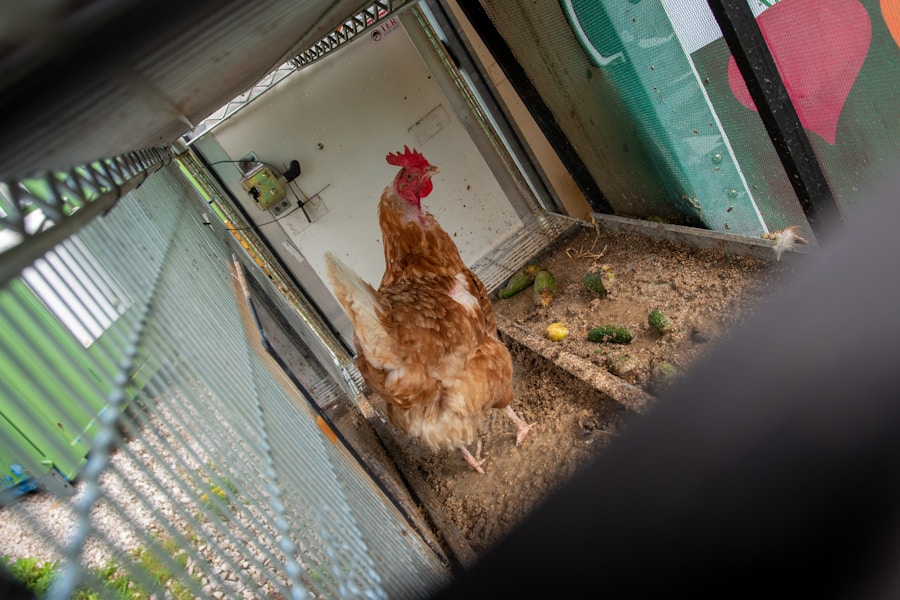
Mount an automatic chicken coop-door light sensor where it can read normal outdoor ambient light, with a reasonably open view of the sky and minimal interference from porch lights, barn lights, headlights or infrared equipment. Avoid burying the sensor deep under an eave or pointing it directly at a permanent artificial light source.
Why sensor placement matters
A light sensor is simply measuring brightness. It does not understand sunrise, sunset or chicken behavior. If its location is unusually dark, the door may open late and close early. If it sees strong artificial light at night, the door may close late or open at the wrong time.
This is why two identical doors on opposite sides of the same building can behave differently.
The best general location
Choose a spot that experiences the same broad day-night transition as the coop yard. A wall with a clear outdoor view is usually better than a sensor recessed inside a dark coop. If the sensor is built into the controller, mount the controller according to the manufacturer’s weather guidance while preserving a clear light path.
Should the sensor face east?
Not always. An east-facing sensor sees morning light early, which can be useful if you want an early opening, but it may also trigger sooner than expected. The best direction is the one that gives a stable reading across seasons rather than intense direct light for a short period.
If your door supports adjustable sensitivity or a remote photocell, you have more flexibility. One BackYardChickens discussion notes owners placing remote sensors on a different side of the coop specifically to improve sunrise exposure.
Avoid deep roof overhangs
A large eave can keep the sensor much darker than the surrounding yard, especially at dawn. That can delay opening and may cause earlier closing in the evening. If the controller has to stay protected under an overhang, a remote sensor can be useful when the product supports one.
Avoid porch lights and security lights
Artificial lights are one of the most common reasons a photocell behaves inconsistently. A motion light can create a particularly confusing pattern because it may turn on only when an animal or person passes nearby.
Coop’s support documentation warns that artificial and infrared lights can interfere with sensor operation. Keep the sensor away from heat lamps, IR cameras and strong security lighting when possible.
What about shade from trees?
Tree shade is not automatically bad, but seasonal foliage can change the light reading. A sensor that works perfectly in winter may sit in heavy shade once leaves return. Watch the first spring and autumn after installation and adjust sensitivity if the opening or closing time drifts too far from flock behavior.
Do clouds affect automatic coop-door sensors?
They can. Heavy cloud reduces ambient brightness. A well-designed system often uses delays or thresholds to avoid reacting to every passing cloud, but exact behavior differs by model. This is one reason hybrid timer-and-light modes can be useful.
How far from the door should the sensor be?
If the sensor is integrated into the controller, follow the installation dimensions for that controller. If it is a remote sensor, distance is limited by the supplied cable or wireless design. The key issue is not distance from the opening itself. It is whether the sensor sees representative outdoor light and stays protected according to the manufacturer’s instructions.
Inside or outside the coop?
An outside location usually gives a better ambient-light reading. Some products can work with a sensor inside if it faces a natural light source, but a dark interior can make calibration harder. Follow the specific model manual because weather sealing and cable routing vary.
Test before trusting the placement
Do not mount the system, set it once and immediately rely on it overnight. Watch several full dusk and dawn cycles. Record when the flock enters, when the door closes, when dawn brightens and when the door opens.
If you see the door opening too early, first check whether the sensor is seeing artificial light or unusually bright morning exposure.
When a timer is the better answer
If the coop sits near changing security lights, vehicle traffic or a deeply shaded building, photocell behavior may always require compromise. A timer gives predictable clock-based operation. A hybrid setup can use a light sensor for one event and a timer for the other. Compare those options in our timer vs light sensor guide.
Installation checklist for the light sensor
- Clear view of normal outdoor ambient light
- No direct porch or barn light aimed at the sensor
- No regular headlight beam
- Protected according to the product’s weather instructions
- Not buried in deep permanent shade
- Easy to inspect and clean
- Tested through several dawn and dusk cycles
Artificial-light issue: If the sensor is near a house or barn light, see whether porch lights can trigger an automatic coop door.
Frequently asked questions
Can I point the light sensor straight at the sunrise?
You can on some systems, but it may make the door open earlier than you prefer. Representative ambient light is usually more useful than the brightest possible exposure.
Can I put the sensor under an eave?
Only if it still receives enough ambient light and the manufacturer’s instructions allow it. Deep overhangs can make the sensor read the yard as darker than it really is.
Should I clean the sensor?
Yes. Dust, mud, spider webs and debris can alter the amount of light reaching a photocell. Include it in routine coop maintenance.
Bottom line
The best place for an automatic coop-door light sensor is a stable, representative outdoor-light location, not simply the brightest spot on the coop. Keep artificial light and deep shade from dominating the reading, then verify the result by watching actual dawn and dusk cycles with your flock.
Nighttime false triggers are a different placement clue: see whether moonlight or reflected light can affect the sensor.
How CoopGear Lab approaches this topic
We separate manufacturer specifications from practical setup guidance and do not claim hands-on testing unless we actually performed it. For automatic doors, we focus on fit, timing, safety, weather, power and maintenance.
Continue with these guides
Affiliate disclosure: CoopGear Lab may earn a commission from qualifying purchases made through links on this site, at no additional cost to you. Affiliate relationships do not change our comparison criteria. Read the full disclosure.